The development of modern, accessible and reliable postal services requires clear policies, as well as the active involvement of all stakeholders participating in the system. It was precisely through such an inclusive and partnership-based approach, with expert and technical support from the PLAC IV project, that the “Programme for the Development of Postal Services in the Republic of Serbia for the period 2026–2030” was prepared, as a key public policy document in the process of implementing the regulatory framework in this field, aligned with the European Union acquis.
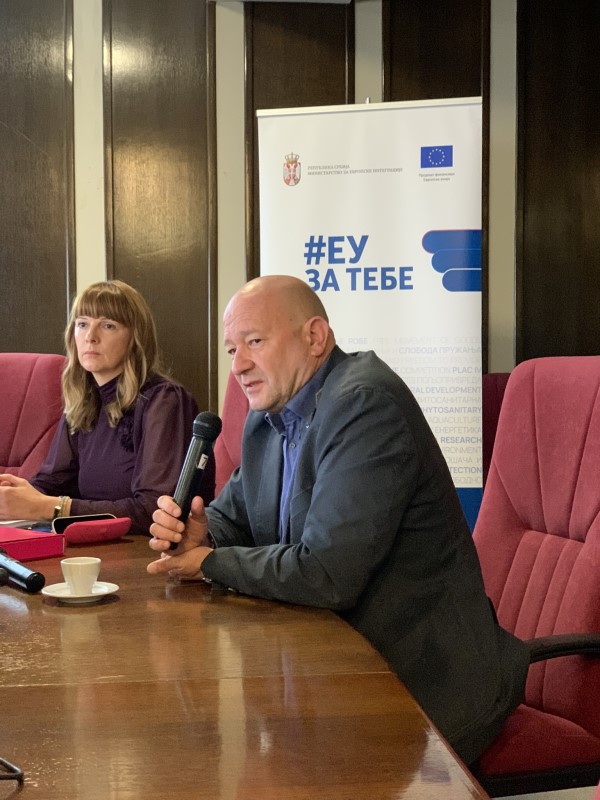
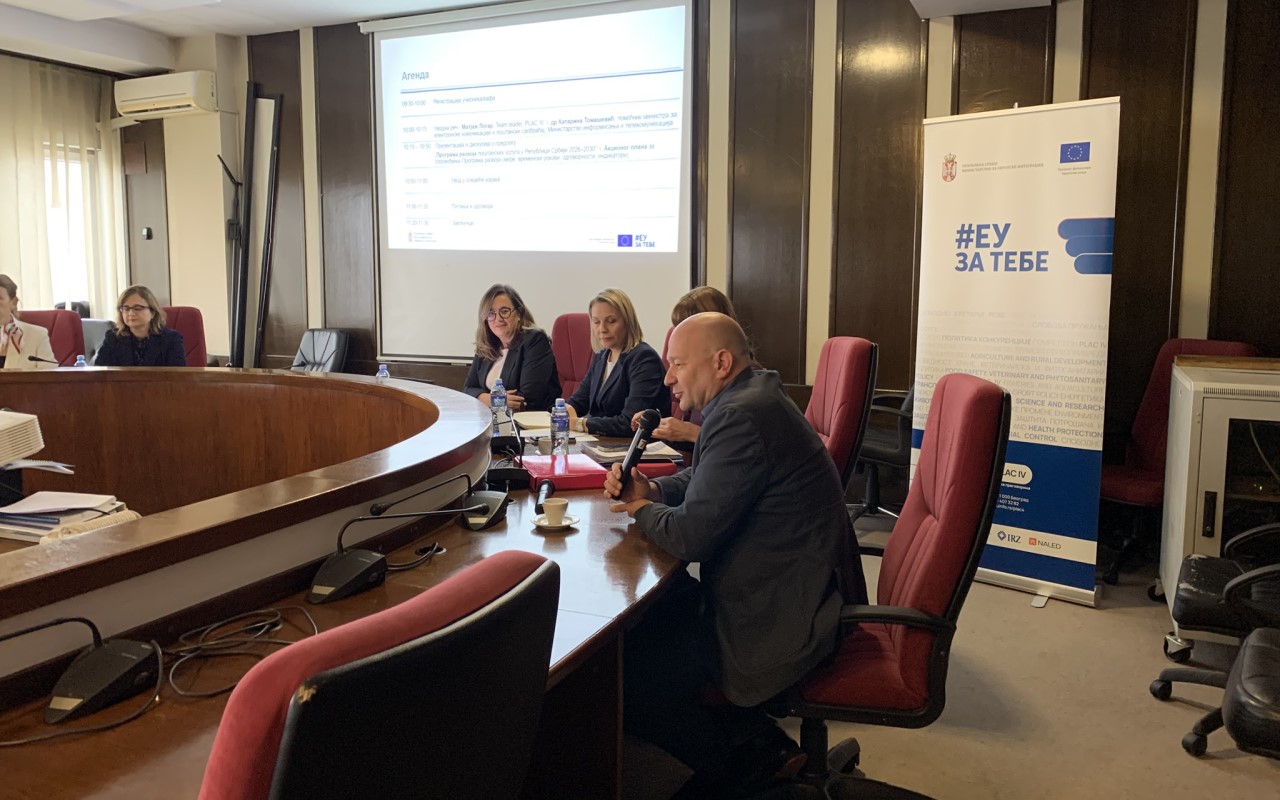
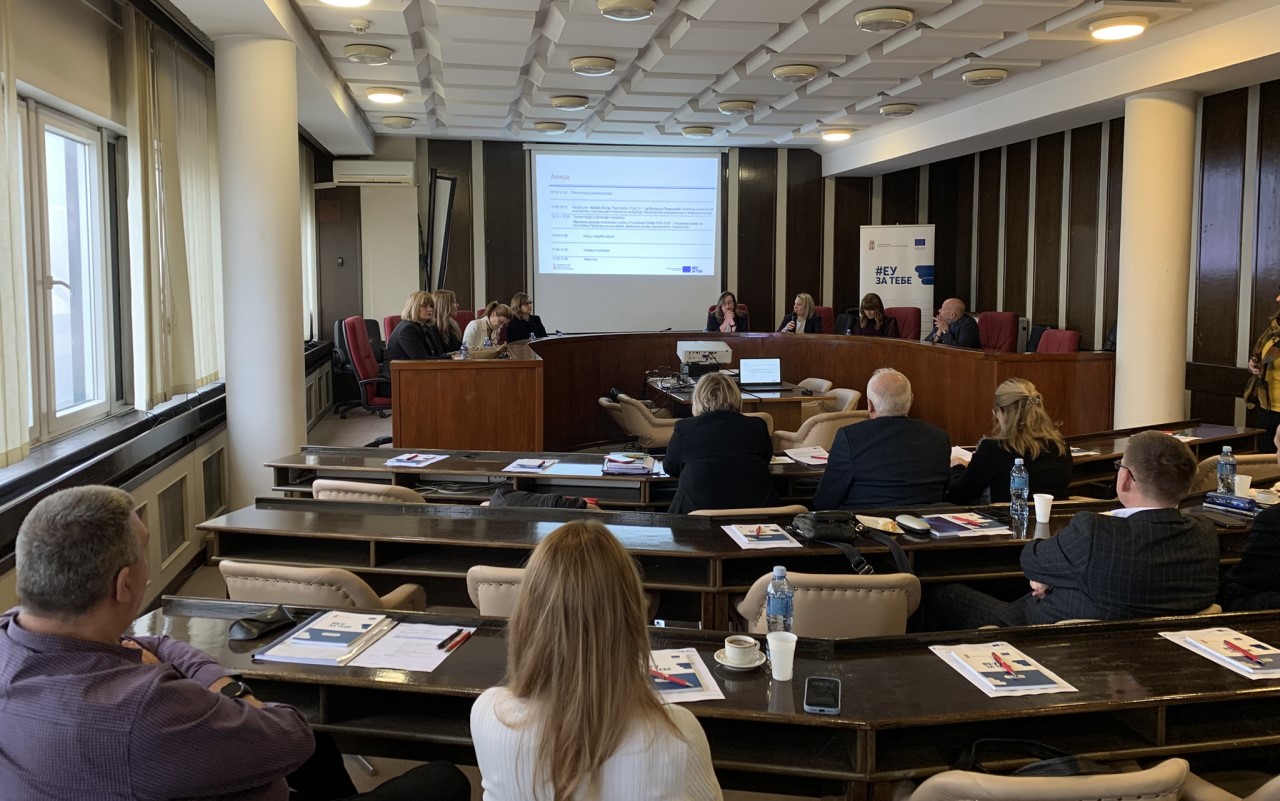
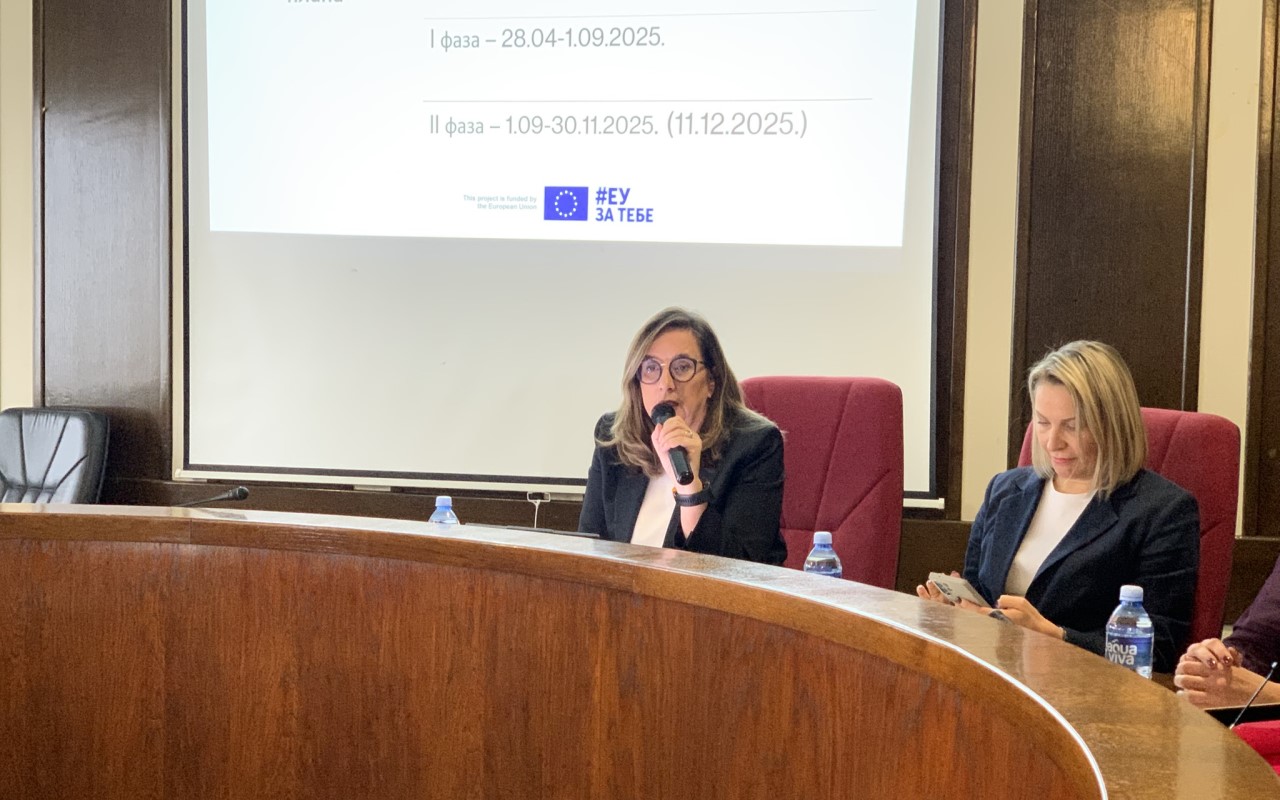
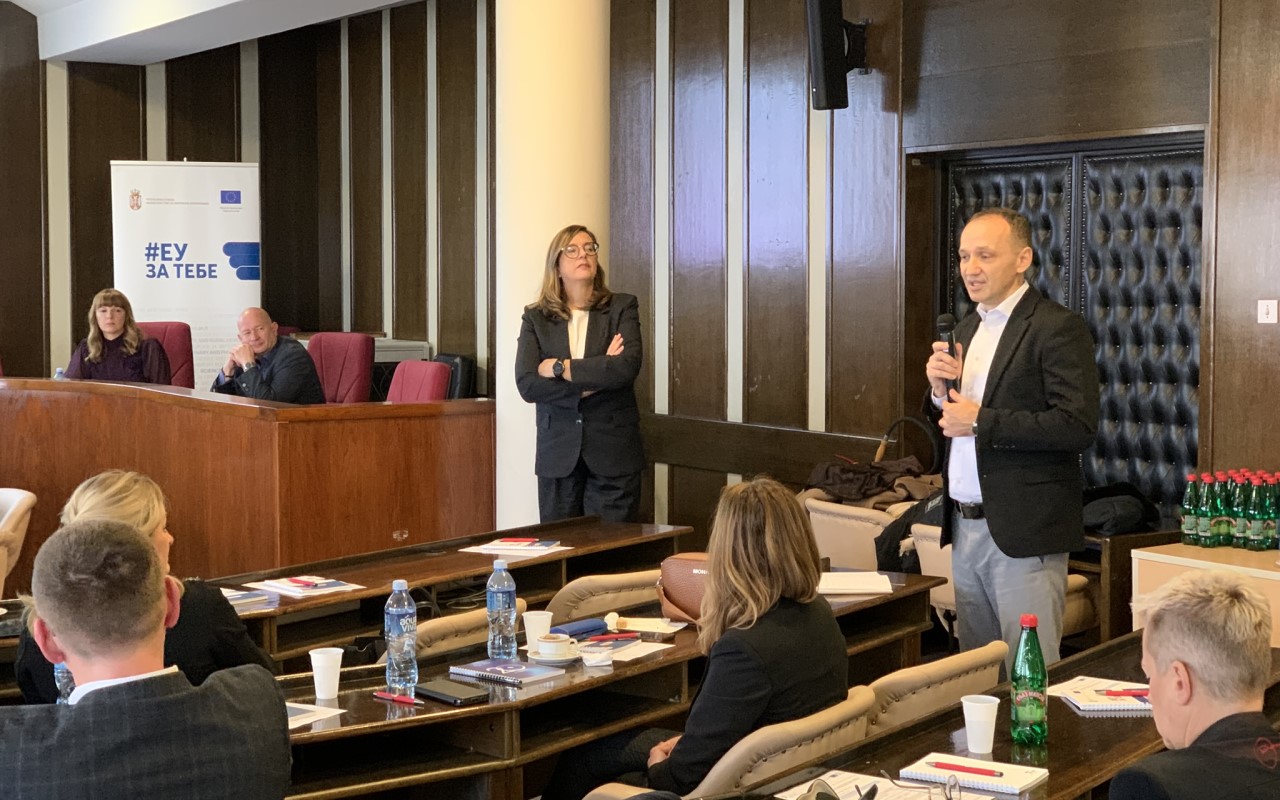
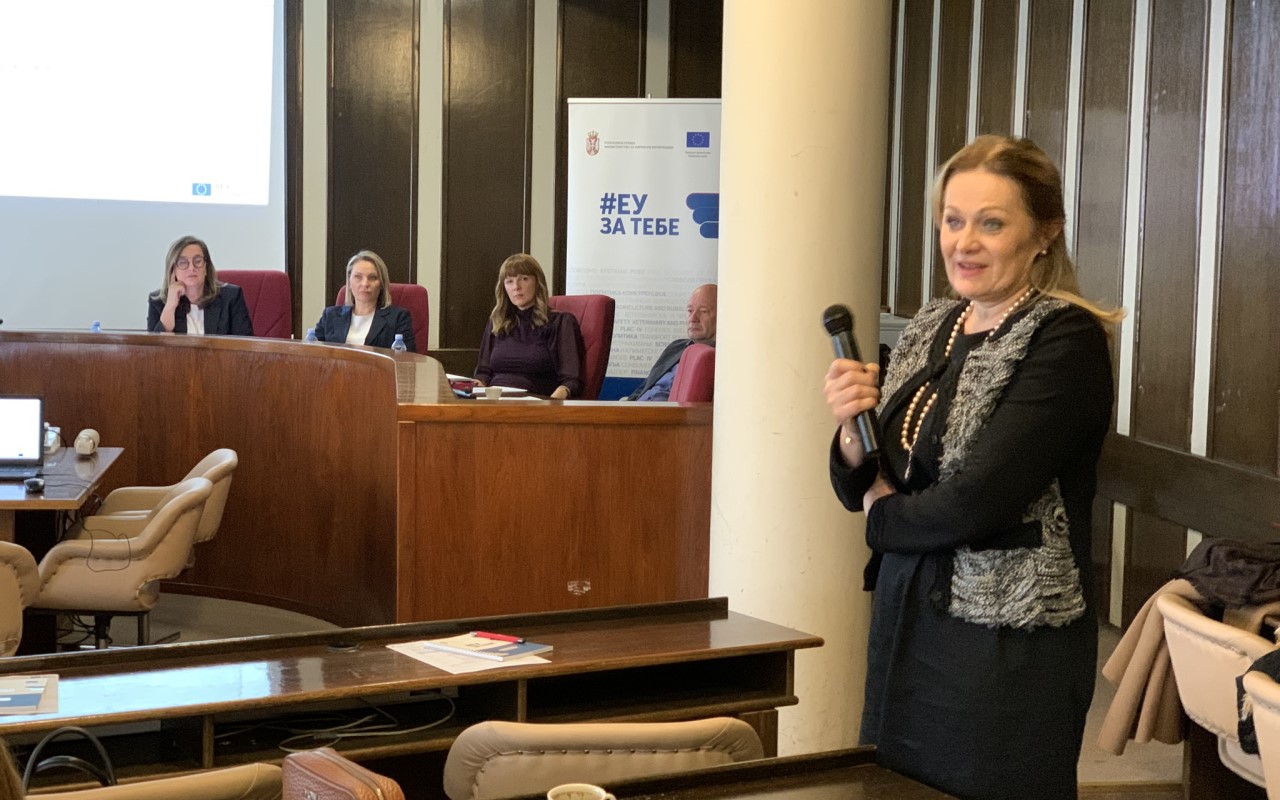
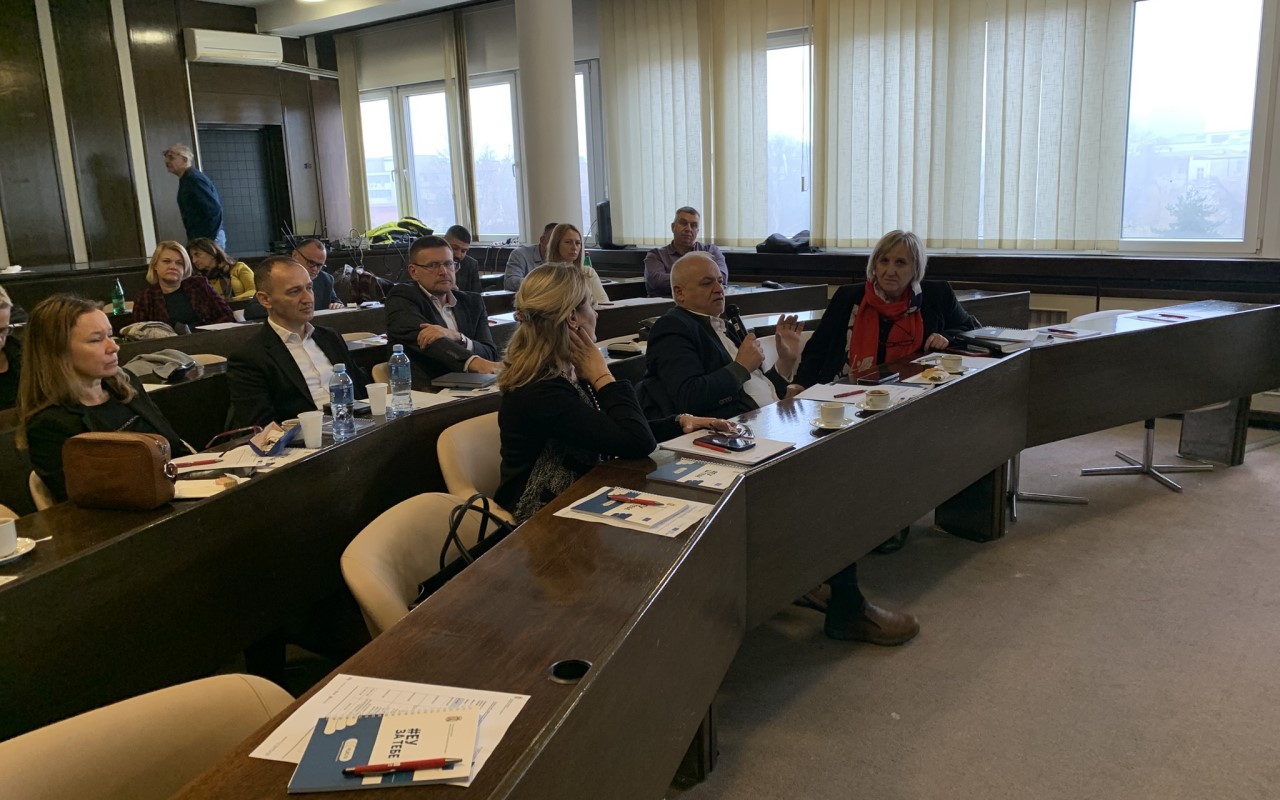
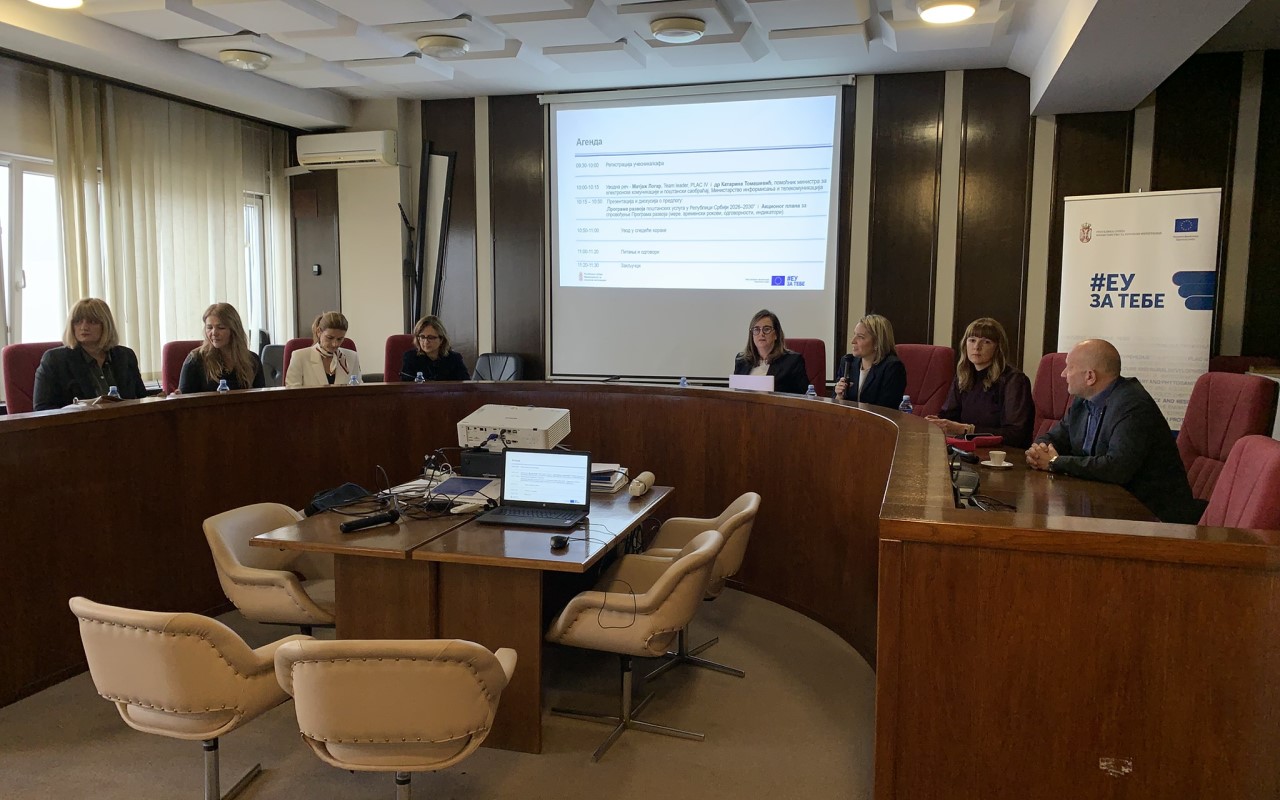
Within the ongoing public consultation on this planning document, and with the support of the PLAC IV project, a round table dedicated to the presentation of the Draft Programme for the Development of Postal Services (the Development Programme) was held on 11 December 2025 at the Ministry of Information and Telecommunications of the Republic of Serbia. The event brought together representatives of the competent institutions, the regulatory authority, public and private postal operators, as well as other relevant stakeholders in the sector.
In his opening remarks, Matjaž Logar, Team Leader of the PLAC IV project, emphasised that the draft Development Programme was prepared as a result of technical cooperation between the PLAC IV project and the Ministry of Information and Telecommunications, with the active participation of other relevant stakeholders in the sector. This support constitutes an important part of the project’s broader engagement in the process of harmonisation—i.e. the implementation—of regulation aligned with the EU acquis, within Negotiating Chapter 3: Right of establishment and freedom to provide services. The new Programme, together with the accompanying action plan, aims to develop a competitive, modern and sustainable postal market in Serbia, its gradual integration into the EU single market, as well as to preserve the accessibility and quality of the universal postal service, in line with EU directives and the recommendations of the Universal Postal Union.
Dr Katarina Tomašević, Assistant Minister for Electronic Communications and Postal Traffic, recalled in her opening remarks that 2025 had been an exceptionally important year for the postal services sector, given that the new Law on Postal Services was adopted in March. As she noted, thanks to the expert support provided by the PLAC project during the previous phases of harmonisation, the postal sector is considered—according to the latest EU progress report—one of the sectors most aligned with the EU legal framework.
FOCUS ON CITIZENS, THE ECONOMY AND NEW TECHNOLOGIES
The draft Development Programme was presented by Estera Rakić, the PLAC IV expert projekta who provided technical support to the beneficiary institutions in its development. She emphasised that Serbia’s postal market is already highly developed and innovative, with a strong focus by private operators on the parcel segment, while the Development Programme sets an overarching objective for the postal market to respond to the growing needs of citizens and the economy.
The document defines three specific objectives: improving the universal postal service as the foundation of digital and inclusive infrastructure; establishing an enabling business environment for more than 40 active private operators; and introducing new technologies and innovations in postal traffic. Phased liberalisation of the postal services market was identified as the optimal solution, as it allows the effects of reforms to be monitored and the regulatory framework to be adjusted on an ongoing basis.
One novelty that particularly attracted participants’ attention is that the Development Programme recognises the potential for applying artificial intelligence in the postal industry, as well as the need to strengthen cybersecurity in light of the sector’s increasing digitalisation. Special emphasis was also placed on modernising so-called “last-mile” delivery services (delivery to the final address—the highest cost, often up to 50% of total delivery costs, and the greatest logistical challenge), including the development of parcel lockers and “out-of-home” solutions (delivery outside the home), which today account for up to half of the total volume of postal services business.
Representatives of the Regulatory Authority for Electronic Communications and Postal Services (RATEL), the Post of Serbia, and a number of private postal operators took part in the discussion. Participants pointed to the unstoppable decline in letter-post services and the strong growth of the parcel segment, with estimates that by 2033 the number of letters and parcels will be equal. The important role of the postal infrastructure of the Post of Serbia, as the only public operator, was also highlighted in the development of e-commerce and eGovernment, particularly given its network of nearly 586 post offices across Serbia.
Representatives of private operators assessed that the Draft Postal Services Development Programme is realistic and well balanced, and that it largely follows their strategic directions, especially in the areas of digitalisation and the application of new technologies.
Ongoing public consultation
 The Draft Postal Services Development Programme is currently undergoing a public consultation on the eConsultations portal, which is open until 25 December 2025, with the aim of informing the professional public about the document and enabling the proposer to collect possible suggestions for further improving it: https://ekonsultacije.gov.rs/topicOfDiscussionPage/487/4 .
Download
- Download: Proposal – Programme for the Development of Postal Services in the Republic of Serbia for the period 2026–2030 (in Serbian)
- Download: Proposal – Action Plan for implementation of the Programme for the Development of Postal Services in the Republic of Serbia for the period 2026–2030 (in Serbian)
Photo gallery