
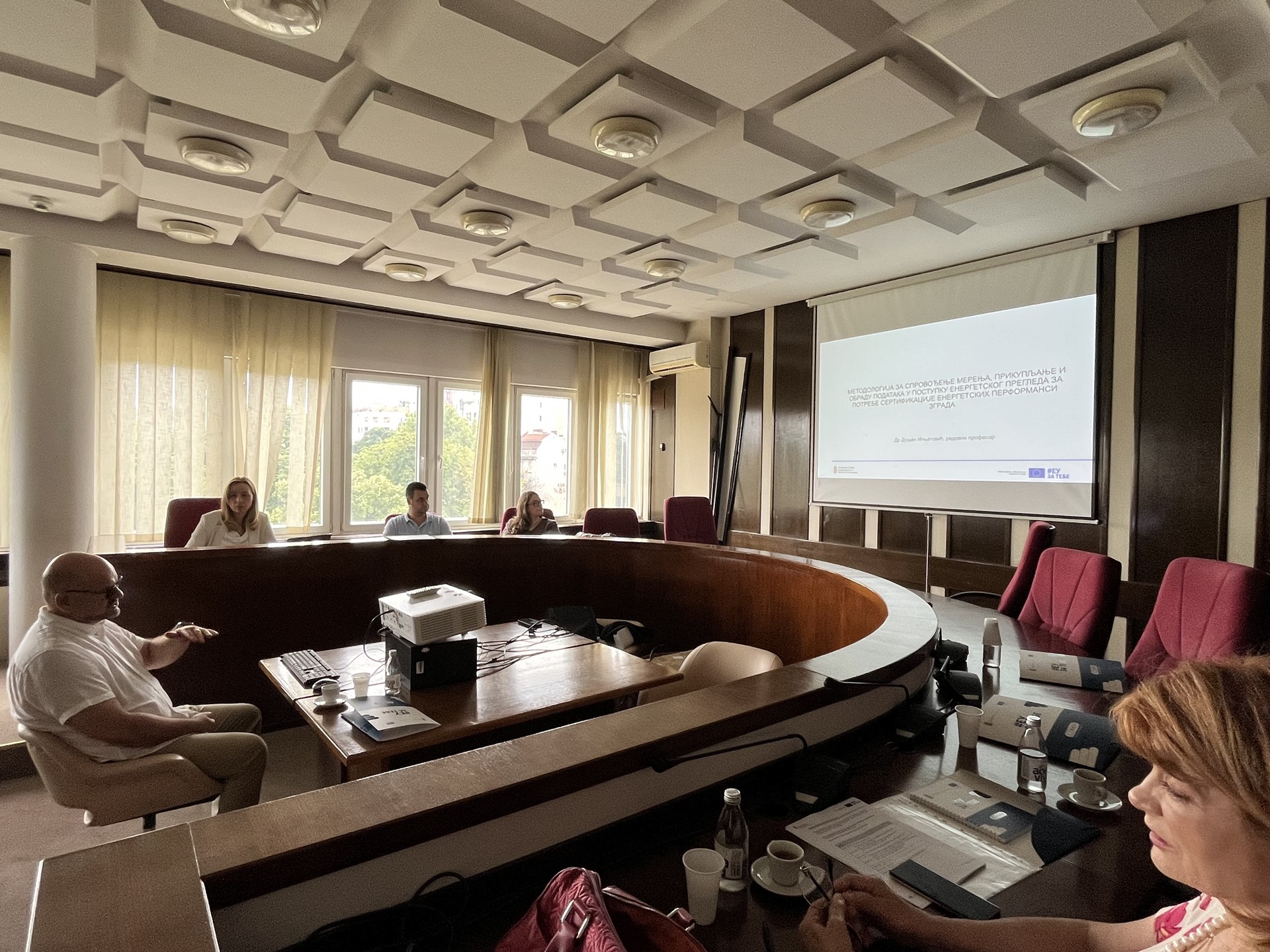
Within the framework of Policy and Legal Advice Centre project and in line with the requirements set by Negotiation Chapter 15 with a special focus on energy policy, a working meeting was held between the PLAC IV project experts and representatives of the Ministry of Construction, Transport and Infrastructure. The meeting served as an opportunity to present the “Methodology for Conducting Measurements, Data Collection and Processing in the Process of Energy Audit for Building Energy Performance Certification.”
The role of this methodology is to ensure a systematic and standardized approach to measuring the energy characteristics of building components in order to obtain reliable data for certifying energy efficiency and identifying potential areas for improvement.
“Our goal is to establish a structured and standardized energy audit process that is aligned with the best European practices. We must define clear phases and principles of the measurement process to ensure the credibility and reliability of certification,” said Prof. Dr. Dušan Ignjatović, PLAC IV expert.
According to Professor Ignjatović, the methodology is based on several key elements:
- Appropriate definition of the type, scope, and method of conducting the measurement process.
- Standardized procedures – meaning that all measurements must be conducted following precise and standardized procedures, using dedicated and certified equipment.
- Combination of methods – ranging from those that provide an overview of the building envelope (such as thermographic imaging), to determining the level of airtightness (the “blower door” test), and if necessary, measuring the heat transfer coefficients. All measures applied in this process belong to the group of non-destructive methods (they do not affect the condition of the envelope).
- In cases where measurements of individual points of the thermal envelope are conducted, it is crucial to select a representative set of measurement points. Determining relevant measurement points is key to obtaining a comprehensive picture of the building’s energy condition.
- Application of other, destructive methods (which affect the envelope’s condition and lead to damage) is foreseen only in cases where inadequate performance significantly deviates from regulatory standards or causes harmful effects for users.
- Harmonization with standards
The implementation itself, according to our expert Dušan Ignjatović, involves a number of challenges, including the procurement of certified equipment, its regular calibration, and the training of professionals. The measurement process must identify and analyse all measurement conditions, and measurements may only be carried out using dedicated and certified equipment. Measurements can be conducted by energy efficiency engineers who are additionally trained and certified to carry out procedures, conduct measurements, and draft reports.
Speaking from his own experience, Prof. Ignjatović noted that acquiring the full set of equipment necessary for high-quality work and optimal results requires significant investment (around EUR 35,000). This high cost entails a series of prerequisites—both from the perspective of investors and from the standpoint of engineers or professionals conducting the energy audits. On the other hand, the training of professionals requires that all courses and training sessions be accessible and standardized, as this is the only path to ensuring high-quality expertise.
With regard to the methodology itself, particular interest was drawn by practical examples of non-destructive methods, including thermographic imaging and air permeability testing. These are aimed at determining the performance of thermal envelope elements of buildings, as well as assessing their general condition, the quality of installed materials, and the presence of defects. Some of the examples are available in the accompanying photographs.
This working meeting is only one component of the broader efforts to enhance the energy efficiency of buildings and align Serbian legislation with EU directives. It represents a significant step in fulfilling the obligations of the Republic of Serbia under Negotiation Chapters 15 and 27.
Establishing this methodology is essential for achieving tangible and measurable results in the field of energy efficiency, which will directly contribute to sustainable development and the improvement of citizens’ quality of life, the participants agreed.