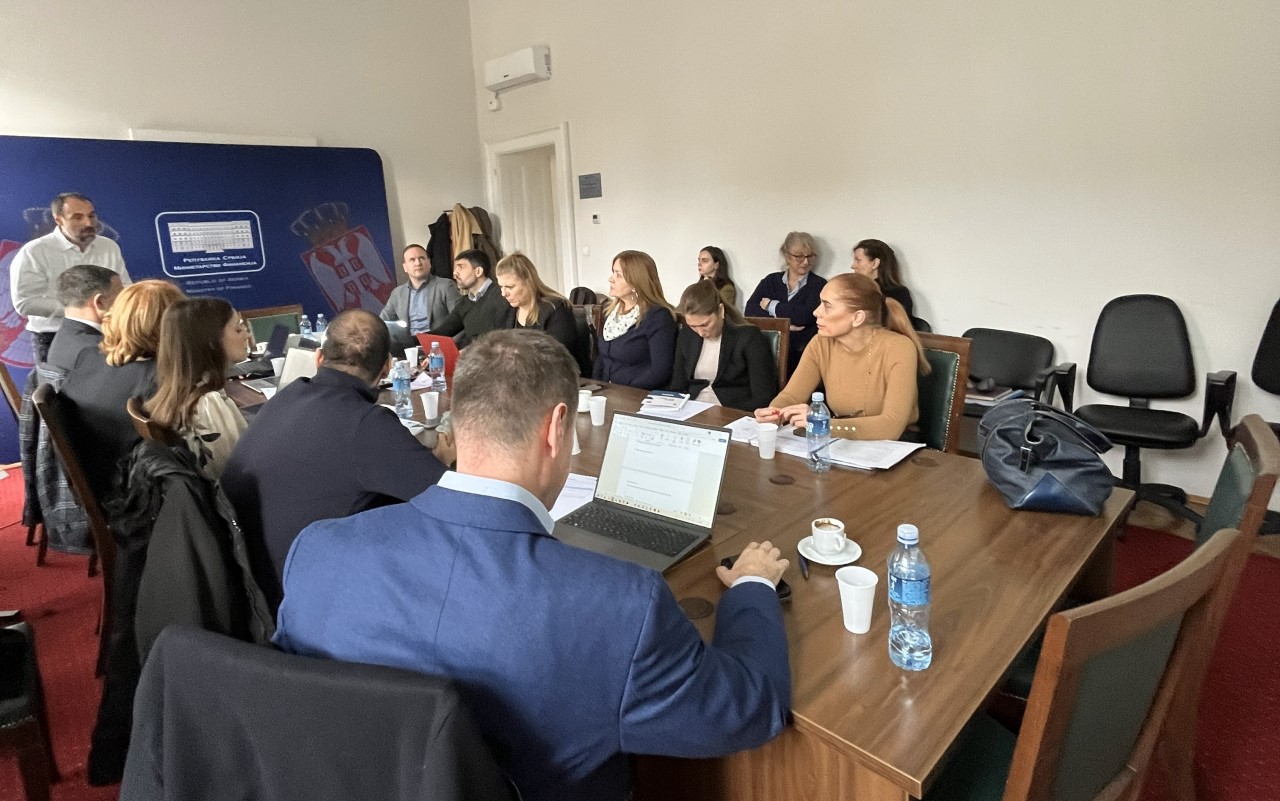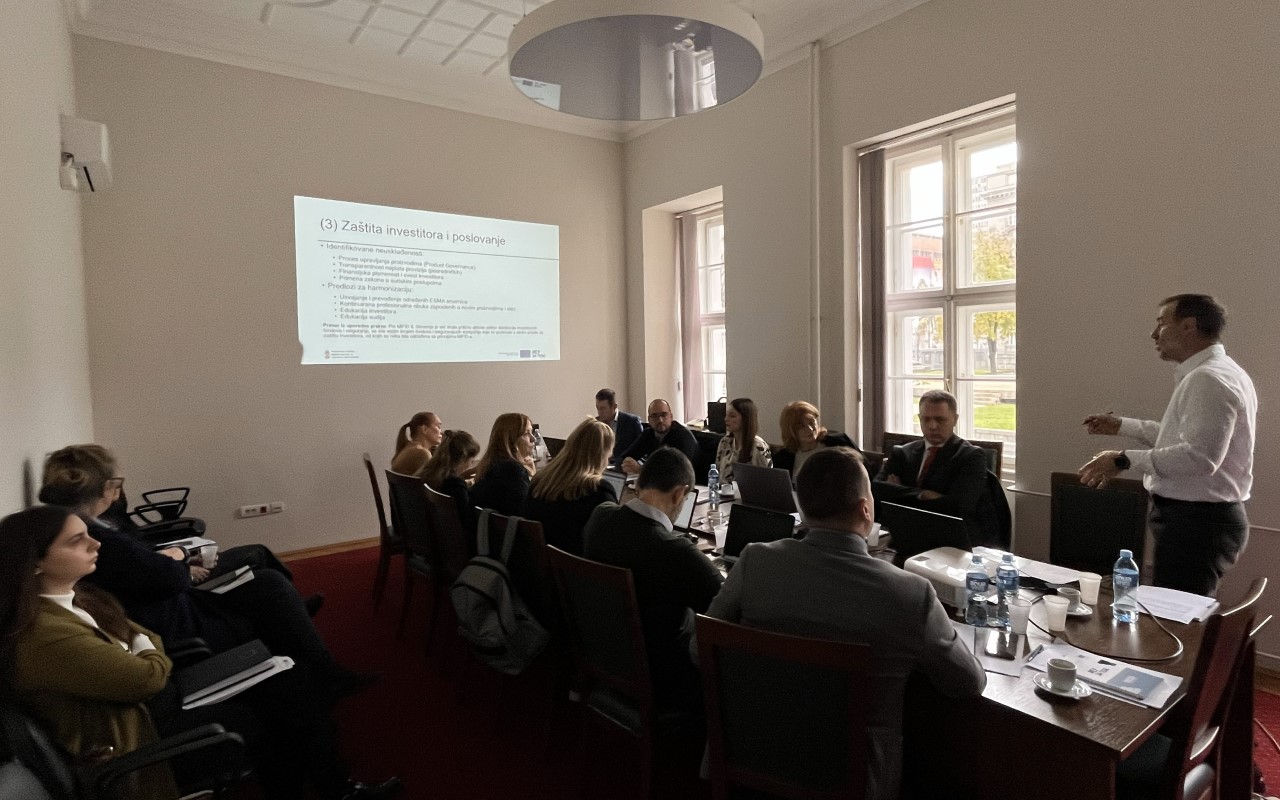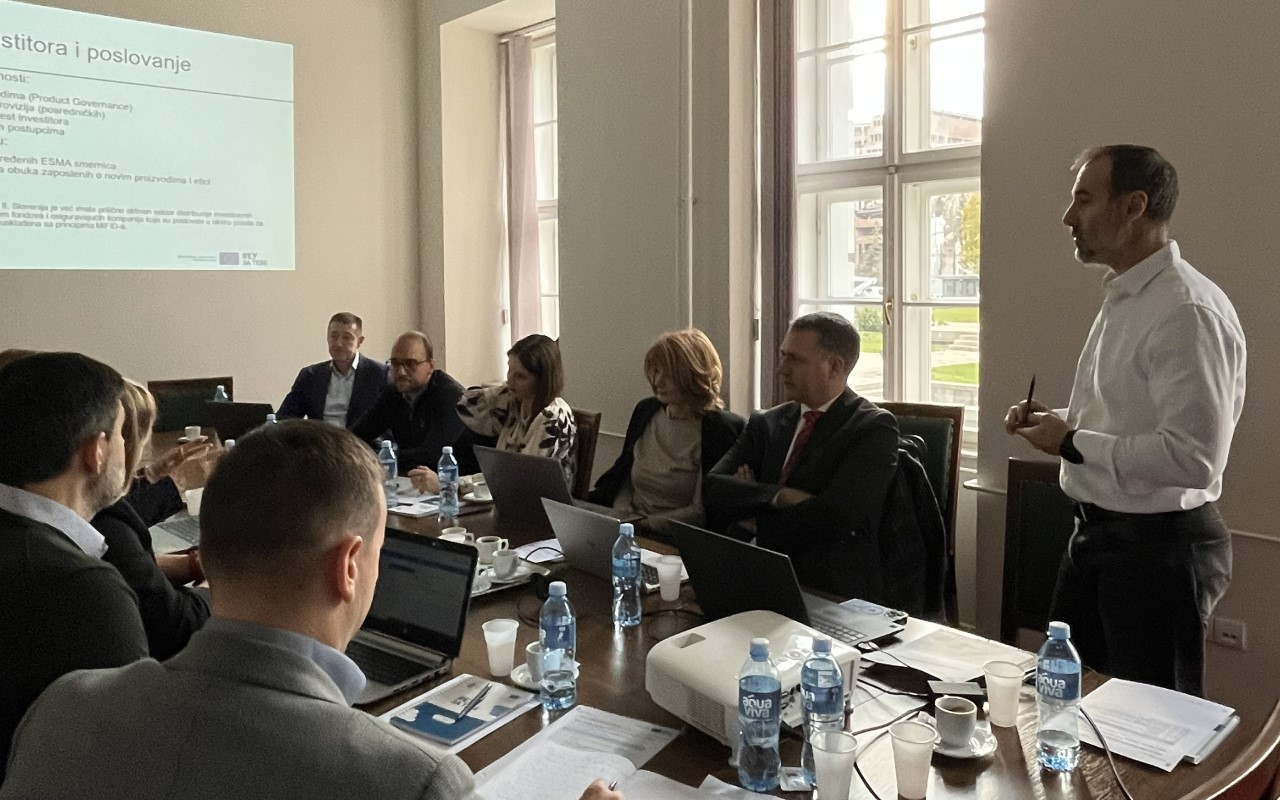
On 5 December 2025 at the Ministry of Finance of the Republic of Serbia a workshop was held dedicated to analysing the alignment of the Capital Market Law with the most recent versions of EU legislation: the Markets in Financial Instruments Directive (MiFID II), the Markets in Financial Instruments Regulation (MiFIR) and the Short-selling Regulation (SSR). The alignment analysis of the Law was carried out by the “Policy and Legal Advice Centre” (PLAC IV) project, which was also the organiser of the workshop, in cooperation with the Ministry of Finance as the beneficiary institution, within Negotiating Chapter 9 – Financial Services.
The event was opened by Aleksandra Dragović Delić, Head of the Securities and Capital Market Group in the Serbian Ministry of Finance. The PLAC IV project was represented by Prof. Dijana Marković Bajalović, PhD, Key Legal Expert of the PLAC IV project. This activity is a continuation of systemic support to institutions in the process of aligning Serbian legislation with the EU acquis in the field of financial services, working on the preparation of the legislative and institutional framework for a modern, transparent and secure capital market. The workshop brought together experts from the Ministry of Finance, the Securities Commission and the Belgrade Stock Exchange, thereby ensuring a comprehensive expert discussion on the further development of the capital market.
PRESENTATION OF THE GAP ANALYSIS AND RECOMMENDATIONS FOR ALIGNMENT
The experts engaged under the project, Petar-Pierre Matek and Vladimir Pavlović, presented the results of their GAP analysis, comparing the current Capital Market Law (adopted in 2021) with the latest amendments to the relevant EU directives and regulations: MiFID II, MiFIR and the Short-selling Regulation.
The analysis showed a high level of alignment of the existing legislation, but also highlighted the areas where further progress is necessary, in particular in the following segments:
- In the area of conditions for the operation of investment companies, it was pointed out that Serbia, as a candidate country, still does not have access to the EU “passporting” system, nor has it fully transposed the regulatory and implementing technical standards of the European Securities and Markets Authority (ESMA), which will be necessary in the next phase. In terms of market structure, it was noted that the existence of only one stock exchange limits the development of trading venues and data flows.
- With regard to investor protection, it is necessary to further strengthen the rules on product governance, cost transparency and education – both of investors and of employees in the financial sector, as well as of judges involved in disputes in this field.
- In terms of transparency and reporting, it was underlined that it is necessary to introduce modern mechanisms for the processing of market data and the exchange of information with other European regulators, including reporting on short positions in line with European standards.
- The regulation of short-selling is one of the areas in which Serbia must improve its legal framework, in particular with regard to the monitoring of short positions, supervision of market makers and the definition of a regime for securities lending.
Summing up, the proposed measures for harmonisation include the full transposition of ESMA standards, strengthening of capacities for supervision and data exchange, the introduction of mechanisms for monitoring short positions, and the enhancement of education for investors and financial intermediaries.
Through the continued work of the PLAC IV project, this form of support from the European Union to the institutions of the Republic of Serbia in developing the financial market is being maintained. Improving the regulatory framework in the area of the capital market will contribute to stronger investor protection, more transparent business practices and greater confidence in Serbia’s financial system.
Currently, the project is actively working on drafting 11 rulebooks necessary for the full implementation of the Capital Market Law. This work is being carried out by PLAC IV expert Mr Petar-Pierre Matek, who also presented the results of the GAP analysis at this workshop.
PHOTO GALLERY