
PLAC IV project is providing expert support for aligning Serbia’s wine sector with EU regulations through work on defining new climatic viticultural zones.
Viticulture in Serbia, as across Europe, is increasingly feeling the effects of climate change. Changes in temperature, an ever earlier start to the growing season and more frequent weather extremes directly affect grape quality and the character of the wine produced. For this reason, the European Union has established a system of viticultural climatic zones which links climatic conditions with wine production rules, including permitted oenological practices and the level of alcohol in the final product.
In the process of aligning Serbian legislation with the EU acquis, the PLAC IV project is providing expert support to the Ministry of Agriculture, Forestry and Water Management of the Republic of Serbia in preparing a new regulatory framework for the wine sector, within Negotiating Chapter 11 – Agriculture and Rural Development.
One of the key results of this cooperation is the drafting of a new Rulebook on the regionalisation of Serbia’s viticultural geographical production areas, as well as the alignment of rules on oenological practices with the relevant EU regulations. The results of this work will also be used in the process of adopting a new Wine Law, which is expected to be passed during this year.
ROUND TABLE ON NEW CLIMATIC ZONES FOR VITICULTURE
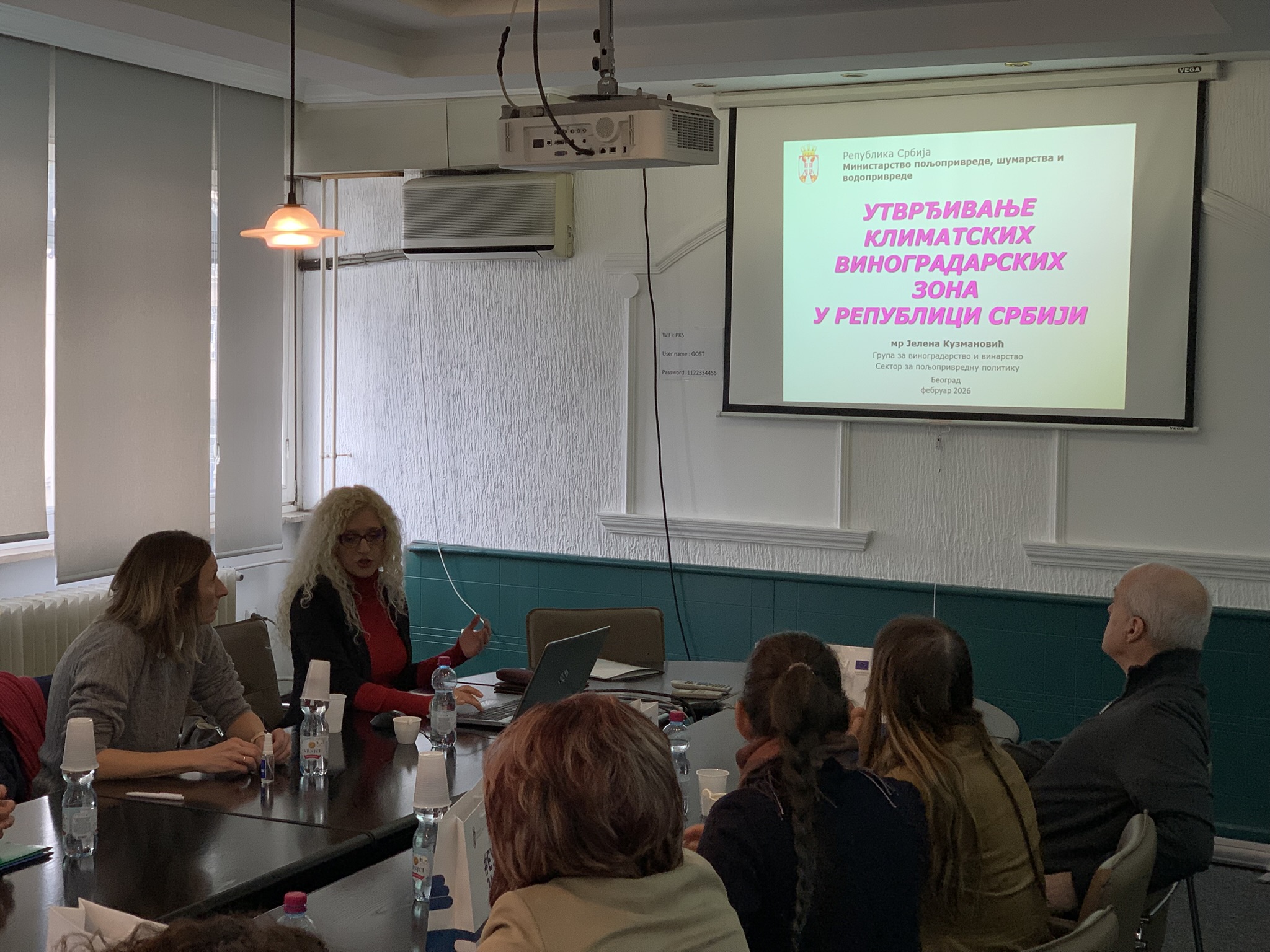
To present the results of the analyses and to hold an open expert discussion with the sector, the PLAC IV project, in cooperation with the Ministry of Agriculture, Forestry and Water Management, organised a round table “Establishing Climatic Viticultural Zones in the Republic of Serbia,” held on 23 February 2026 at the Chamber of Commerce and Industry of Serbia.
The event brought together representatives of the academic community, institutions and the wine sector, including professors from the Faculties of Agriculture in Belgrade and Novi Sad, agricultural inspectors, representatives of wineries and grape growers, the Association of Winegrowers of Serbia, as well as representatives of the Chamber of Commerce and Industry of Serbia.
The round table was opened with remarks by Matjaž Logar, Team Leader of the PLAC IV project, and Jelena Kuzmanović from the Ministry of Agriculture, Forestry and Water Management, who underlined the importance of aligning national regulations with the complex set of EU rules governing the wine sector, including Regulation (EU) No 1308/2013 and the related legislation defining viticultural zones and permitted oenological practices.
New Climate Data and the Shift in Serbia’s Viticultural Zone
At the round table, experts from the PLAC IV project presented the results of the latest climate analyses, showing that climate change has already led to significant shifts in viticultural conditions in Serbia.
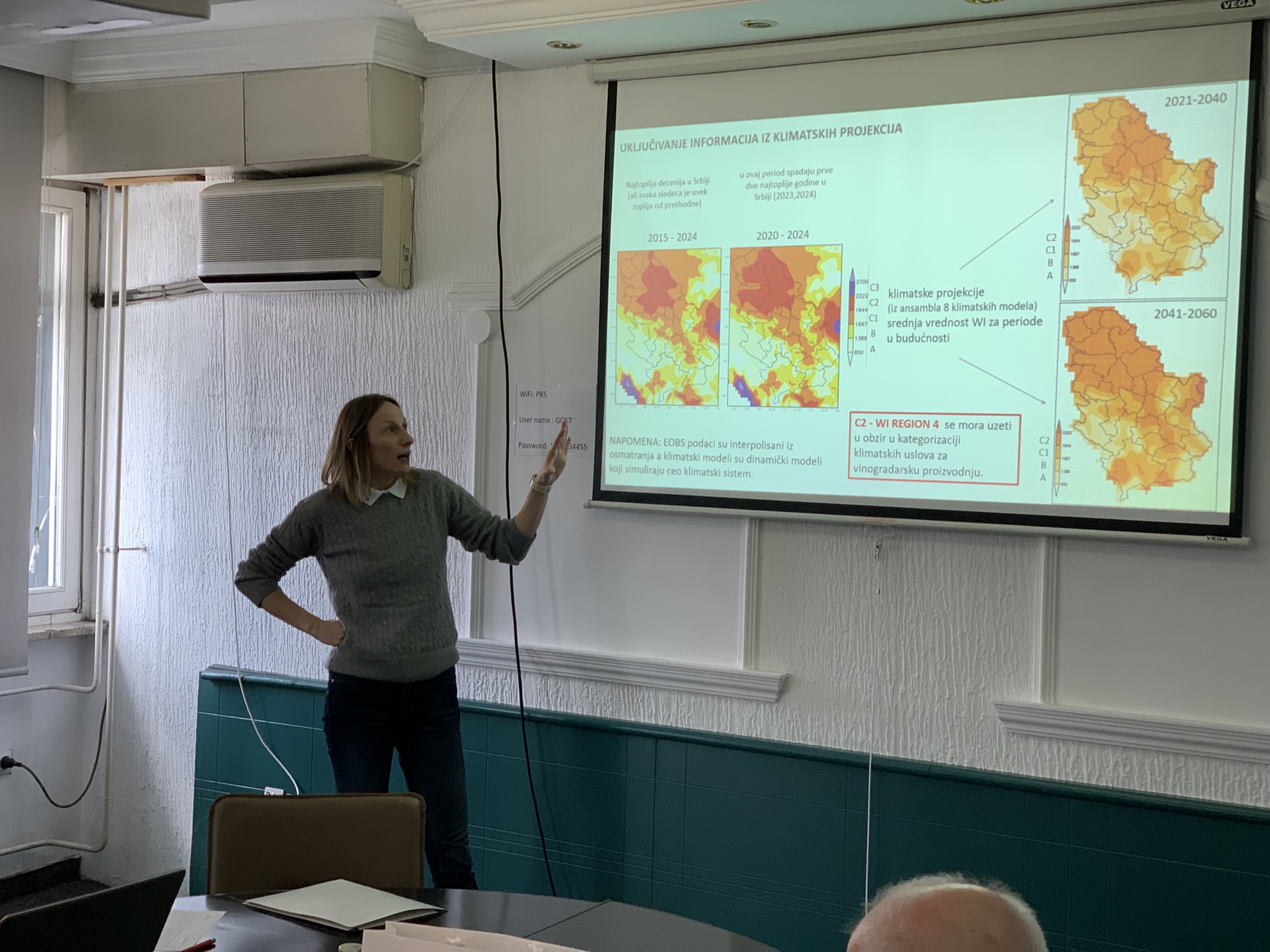 Climatologist Prof. Dr Ana Vuković Vimić presented an analysis of climatic regions relevant to viticultural production, noting that the average temperature in Serbia has increased by around two degrees compared to the second half of the 20th century. This has resulted in greater climate variability and changes in the conditions for grapevine cultivation.
Based on the latest climate measurements and an analysis of the so-called Winkler Index, the research indicates that Serbia no longer predominantly belongs to viticultural Zone B, as previously regulated (in 2010), but is now classified as Zone C – an important basis for adjusting national regulations accordingly.
Prof. dr Dragoslav Ivanišević, from the Faculty of Agriculture in Novi Sad, acting as an expert engaged under the PLAC IV project, presented an overview of permitted oenological practices in the European Union across different climatic zones and their relevance for domestic producers.
“Given climate change, it is necessary to adapt certain regulations within the legislative framework governing wine production. Permitted oenological practices will be harmonised in line with the new situation,” Prof. Ivanišević emphasised, explaining that the new climatic zone classification represents an important step in adapting the Serbian regulation to current climatic conditions and in aligning it with the EU rules.
WHAT THE NEW CLIMATIC ZONES MEAN FOR WINE PRODUCERS
During the discussion, representatives of wineries and grape growers shared their practical production experience, which largely confirmed the results of the analyses presented. Particular attention was drawn to the challenges posed by climate change, such as an earlier start to the growing season, an increased risk of late spring frosts, and increasingly frequent weather extremes, including hail and high temperatures during the vegetation period.
At the same time, the new classification of viticultural zones has important economic significance. Aligning national rules with EU legislation on wine production will enable domestic producers to operate more easily on the European Union’s single market and to plan production more effectively in the period ahead.
It is expected that the new classification of climatic zones, together with the accompanying regulations in the wine sector, will be fully applied starting from next year.
CONTINUED EU SUPPORT FOR REFORMS IN THE WINE SECTOR
Through previous activities, the European Union supported the alignment of Serbia’s legislation in the wine sector by financing the drafting of the Law on Wine and Other Products from Grapes and Wine under the project “Strengthening and adaptation of administrative capacities for the introduction of the Organisation of Agricultural Markets”. By continuing this support through the PLAC IV project—particularly through the establishment of new viticultural climatic zones and further alignment of regulations with the EU acquis—an important part of the harmonisation process in this field is being completed.